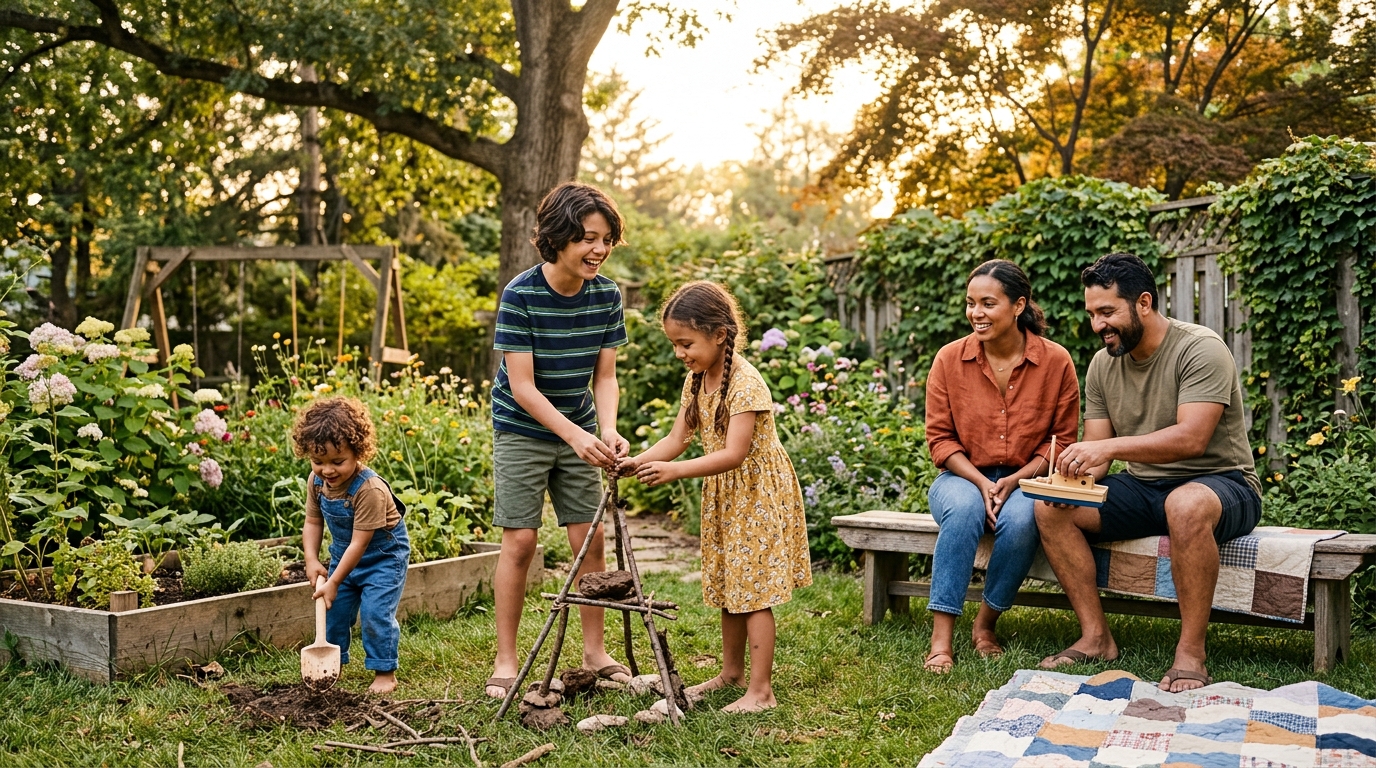
More parents are returning to screen-free play because high-stimulation digital media is linked to shorter attention spans and increased emotional reactivity in young children. A 2019 JAMA Pediatrics study found that preschoolers with higher screen exposure perform worse on developmental tests. The alternative is simpler than expected: outdoor toys, board games, and unstructured play. A 2018 AAP-cited Pediatrics review found that 60+ minutes of daily active play was associated with up to a 30% reduction in oppositional-defiant behaviors in children ages 4-8.
Quick Answer
More parents are returning to old-school play because high-stimulation digital media is linked to shorter attention spans and increased emotional reactivity in young children. Screen-free activities — outdoor games, classic toys, unstructured time outside — activate different cognitive pathways that support focus, creativity, and self-regulation. Simple outdoor toys like foam catch games and flying discs can replace screen time in under a minute, with no setup required.
What Is Driving Parents Back to “Old Technology”?
Parents are making this shift after noticing real behavioral changes in their kids. Children who consume fast-paced digital content — short videos, reactive gaming, endless scroll — show more frequent emotional crashes and lower frustration tolerance than children with balanced routines that include outdoor and active play.
Overstimulation happens when a child’s nervous system is flooded with rapid-fire input. Screens deliver this at a rate that developing brains were not built to process continuously. Parents often describe it as “the glaze” — a flat, irritable state that kicks in after extended screen time.
The alternative parents are reaching for is not complicated. It is slower, quieter, and more physical. Board games. Puzzles. Tossing a ball outside for 30 minutes.
What Does “Old-School Play” Actually Look Like in 2026?
Unstructured play — child-directed free play with no predetermined rules, goals, or adult instruction. Examples: building a fort from couch cushions, inventing a backyard game with sticks, chasing a boomerang across the yard until someone gets a clean return. Research links unstructured play to improved creativity, problem-solving, and emotional regulation in kids ages 3-12.
In practice, parents returning to old-school play describe a mix of:
- Classic board games and card games with real win/loss stakes
- Hands-on outdoor toys that do not require charging or a Wi-Fi password
- Slower media — educational content with real pacing, like audiobooks and documentaries
- Backyard games that burn energy and build coordination: throwing games, running games, water play
The common thread is physicality and open-endedness. Kids are moving, making decisions, and experiencing real consequences (you missed the catch; try again) instead of being handed an instant reset.
One reason the screen-free shift sticks is that the right outdoor gear removes the friction. When a foam disc or catch set is sitting by the back door, kids grab it on the way out — no charging, no setup, no argument. Refresh Sports builds their entire line around that principle: toys like the Fun Flying Disc – Soft Frisbee ($13.97) and Toss and Catch Ball Game Set – Baseball Paddles ($27.97) are designed for kids ages 3-12 to pick up and start playing within 30 seconds. The Soft Stone Skippers Game ($15.97) turn any pool visit into an instant activity. The goal is simple — if the toy is easier than the screen, it wins.
What Does the Science Say About Low-Stimulation Play Environments?
Lower-stimulation environments produce measurably different outcomes in children. A 2019 study published in JAMA Pediatrics found that preschool-age children with higher screen exposure performed worse on developmental screening tests than peers with more balanced play routines, regardless of content quality.
Gross motor skills — the large-muscle movements that include running, jumping, catching, and throwing — develop most rapidly through physical, outdoor play. These skills are tied to academic readiness, coordination, and proprioceptive input (the brain’s sense of where the body is in space) that helps children regulate emotion and focus.
Slower play also teaches patience. When your kid tosses a foam boomerang and it veers off course, they adjust their throw. That feedback loop — try, observe, adjust — is largely absent from screen-based entertainment, where failure states reset instantly with no learning required.
How Do You Make the Switch Without a Family Meltdown?
A cold-turkey approach rarely works. Guidance from the American Academy of Pediatrics recommends a gradual phase-out paired with clear, appealing alternatives.
Practical steps that work for most family play routines:
- Set one screen-free block per day — typically after school or before dinner — and fill it with a specific outdoor activity, not a vague “go play.”
- Offer choice within the structure. “Do you want to toss the disc in the backyard or ride your bike?” preserves autonomy and reduces pushback.
- Go outside with them for the first week. Parent participation signals that outdoor time is worthwhile, not a punishment.
- Start with novelty. A new foam toy or simple catch game creates enough initial pull to break the habit short-term.
Most parents report the pushback disappears within two weeks once kids discover that screen-free activities for kids can be genuinely more engaging than passive watching.
What Happens to Kids Who Get More Outdoor Time Over Time?
Kids who consistently get more outdoor, active play time sleep better, regulate emotions more easily, and are more cooperative overall. Outdoor physical activity reduces cortisol and corrects the sleep deficit that drives a lot of the difficult behavior parents are actually fighting every day.
The long-term case for nature play and outdoor play is also relational. The kids playing catch in the backyard are talking, negotiating, and learning to exist in physical proximity to other people. That is the original social network — and it still works. For more on building active routines into daily life, visit raisingactivekids.com.
References
- American Academy of Pediatrics. Media and Young Minds. Pediatrics, 2016. https://publications.aap.org/pediatrics/article/138/5/e20162591/60503
- Madigan S, et al. Association Between Screen Time and Children’s Performance on a Developmental Screening Test. JAMA Pediatrics, 2019.
- Yogman M, et al. The Power of Play: A Pediatric Role in Enhancing Development in Young Children. Pediatrics, 2018.
- For backyard games for families and gear guides, visit backyardplayguide.com.
- American Academy of Pediatrics — healthy active living for families