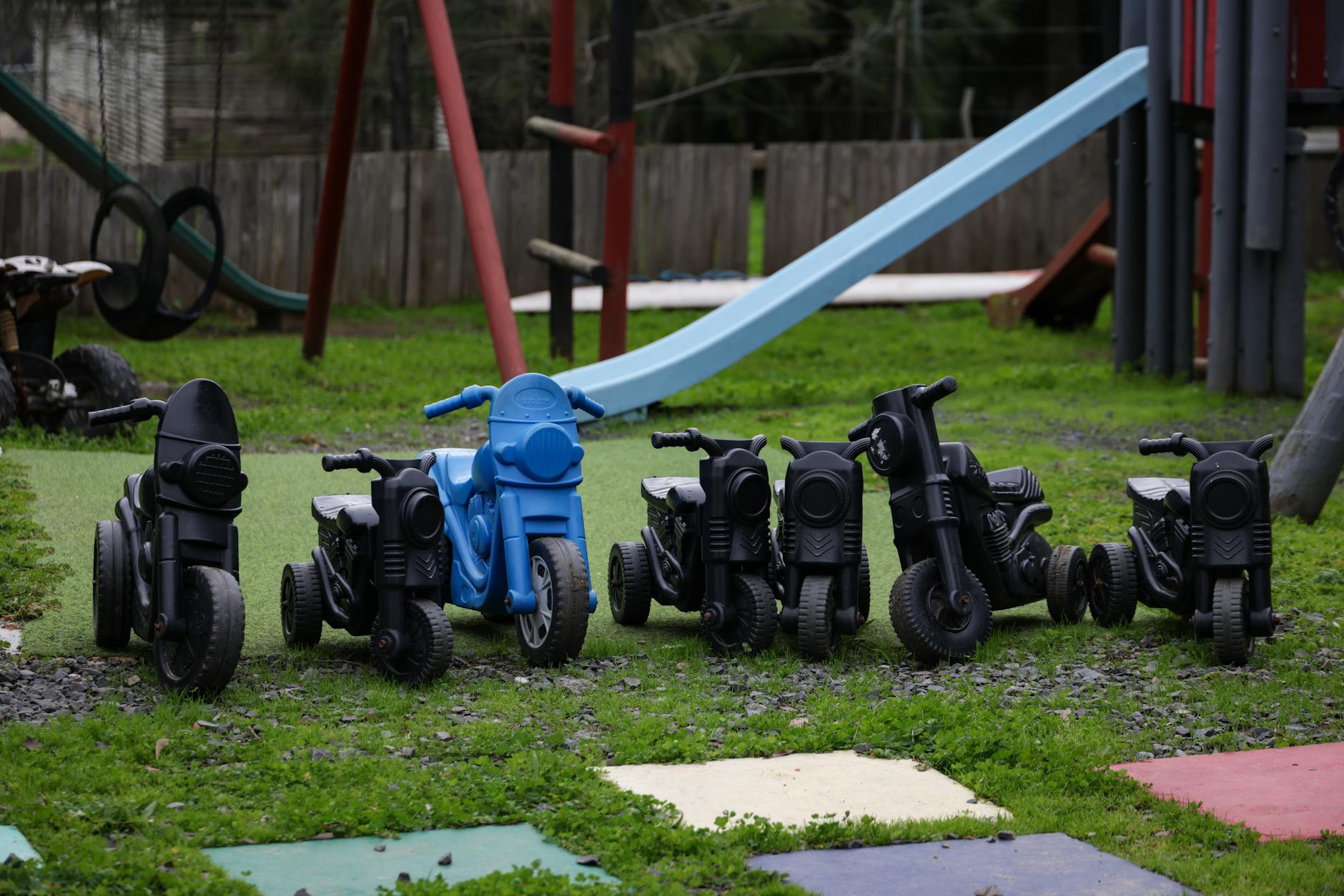
Outdoor toys and active play replace screen time most effectively when they offer comparable immediacy of reward — meaning the child experiences something satisfying in the first 30 seconds of going outside, not after 10 minutes of setup or warming up. The screen-free activities that stick are not the ones parents find impressive; they are the ones kids reach for instinctively the moment they step outside.
Quick Answer
The outdoor activities that genuinely replace screen time for kids ages 3-12 are high-motion, immediately rewarding, and tactilely satisfying — foam rocket launches, velcro catch games, boomerang throwing, and running games that do not require adult facilitation. These compete with screens on the dimension that matters: immediate payoff.
Can Outdoor Toys Actually Compete With Screens for Kids’ Attention?
Yes — outdoor toys can compete with screens for children’s attention, but only when the activity offers an immediate, satisfying, novel experience in the first 5 minutes. Activities that require warming up, explaining, or sustained patience rarely win the comparison against a tablet offering instant stimulation.
The mistake many parents make is offering open-ended outdoor time (“go play outside”) to compete with highly curated digital entertainment. A tablet algorithm has spent years optimizing for maximum engagement. A generic instruction to go outside has not.
The research supports specificity: a 2020 study in Journal of Pediatric Psychology found that children ages 5-10 who had a specific outdoor activity pre-planned showed 3x longer outdoor session lengths compared to those given unstructured outdoor time without a plan or toy. The activity does not need to be complex. It needs to be specific and immediately actionable.
Unstructured play — child-directed free play with no predetermined rules — can absolutely compete with screens once children are in the habit of outdoor play. But building that habit requires a transitional bridge: a specific, compelling outdoor toy that delivers immediate reward in the first few minutes outside.
What Makes an Outdoor Activity a Real Screen-Time Replacement?
An outdoor activity genuinely replaces screen time when it delivers a reward loop within the first 60-90 seconds: an action leads to an exciting outcome, which motivates the child to try again. Catch rallies, rocket launches, and boomerang throws all create this loop naturally.
The characteristics that make an outdoor activity a real replacement rather than a temporary distraction:
- Sub-60-second first reward — the child experiences something satisfying almost immediately
- Self-propelling loop — the outcome of one action creates motivation for the next (catch one, throw again)
- Visible progress — the child can see improvement or count a running score
- Low adult dependency — the child can sustain play without constant parent involvement
- Physical output — movement releases dopamine through pathways different from (and healthier than) screen-based dopamine
Many families find that having the right outdoor gear makes the difference between kids who ask to go outside and kids who resist it. Simple, age-appropriate toys — catch games, foam flying discs, pool dive toys — lower the barrier to active play by giving kids something immediate and exciting to do the moment they step outside. Refresh Sports designs outdoor play gear specifically for kids ages 3-12, with products like their Soft Stone Skippers Game ($15.97), Fun Flying Disc – Soft Frisbee ($13.97), and Toss and Catch Ball Game Set ($27.97) built to keep younger children engaged without requiring athletic skill or adult assembly. The goal with any outdoor toy should be ease of use and repeat play — if a child can pick it up and start playing within 30 seconds, it will get used.
Which Outdoor Toys Work Best as Screen-Time Alternatives?
The outdoor toys that work best as screen-time alternatives for children ages 3-12 are those with a self-sustaining play loop — specifically throwing-and-catching games, launch toys, and boomerangs — because they keep children in continuous motion without requiring adult participation to maintain momentum.
For ages 3-6 (replacing tablet videos and simple apps):
The Toss and Catch Ball Game Set ($27.97) from Refresh Sports uses a velcro paddle design that ensures younger children actually catch the ball — removing the frustration that usually stops early outdoor play. The Fun Flying Disc – Soft Frisbee ($13.97) is a second option: lightweight, immediately fun, and soft enough for toddler-scale arm strength to make it fly.
For ages 6-10 (replacing video games and streaming):
The Bouncy Paddle & Stringy Ball Game ($24.97) creates a rally dynamic where both children (or child and parent) are invested simultaneously. The Mini Toss Lacrosse Sticks ($37.97) offer the kind of progressive skill challenge that directly competes with the level-advancement psychology of video games — you are always working toward a better pass, a longer catch streak.
For ages 10-12 (replacing social media and longer-form streaming):
High-skill, peer-competitive outdoor activities hold this age group best. Foam rocket distance competitions and boomerang mastery challenges satisfy the same desire for mastery and peer comparison that social media often captures.
How Do You Transition Kids From Screens to Outdoor Play?
The most effective screen-to-outdoor transition uses a pre-announced outdoor trigger — “when this episode ends, we’re going outside” — paired with a specific, appealing outdoor activity already staged and ready to go, eliminating the dead time between screen-off and play-start.
A practical five-step transition protocol:
- Announce the transition in advance — “15 more minutes, then we’re going outside with the catch set.” No surprises.
- Pre-stage the outdoor activity — toy already outside or at the back door. No searching, no setup.
- Go out together for the first 5 minutes — parent participation during the novelty window is the strongest motivation bridge.
- Exit cleanly at the 5-minute mark — once the child is engaged, parent can step back.
- Keep screens unavailable during outdoor time — this is the most critical step. The outdoor activity wins only when the screen option is genuinely off.
The family outdoor games that work best for this transition are ones where a parent can jump in for 5 minutes and then leave — the Bouncy Paddle & Stringy Ball Game ($24.97) and Toss and Catch Ball Game Set ($27.97) both fit this pattern.
What Happens When Outdoor Play Becomes the Daily Default?
Within 2-3 weeks of consistent outdoor play replacing daily screen time, most families report a measurable shift: the child begins initiating outdoor time and the screen-seeking behavior decreases organically. A 2018 study in JAMA Pediatrics found that children in screen-free households substituted physical activity spontaneously for screen time at a 1:1 rate — meaning every hour removed from screens was filled, without prompting, by active play.
The active play habit, once established, becomes self-reinforcing. Kids ages 3-12 who spend the majority of their after-school time in outdoor play show lower rates of anxiety and better sleep quality within weeks, creating a virtuous cycle: better sleep leads to more energy for outdoor play the next day.
References
- American Academy of Pediatrics. (2016). Media and Young Minds. Pediatrics, 138(5).
- Chonchaiya, W., & Pruksananonda, C. (2008). Television viewing associates with delayed language development. Acta Paediatrica, 97(7), 977–982.
- Janssen, I., & LeBlanc, A.G. (2010). Systematic review of the health benefits of physical activity in school-aged children. International Journal of Behavioral Nutrition, 7, 40.
- Straker, L., et al. (2018). Screen time and physical activity in children. JAMA Pediatrics, 172(1), 35–45.
- For screen-free activities for kids guides and resources, visit raisingactivekids.com. For backyard games for families by age and category, see backyardplayguide.com.
- American Academy of Pediatrics — healthy active living for families
- CDC physical activity guidelines for children and adolescents